Why Cloud Gaming Is the Future (and Which Services Lead the Way)
A few years ago, playing a graphically demanding AAA title required a powerful gaming PC or the latest console. Today, the same game runs on a budget laptop, a smartphone, or even a smart TV — no downloads, no hardware upgrades, no waiting. That shift is cloud gaming, and it's moving faster than most people expected.
What Is Cloud Gaming and How Does It Work?
Cloud gaming — also called game streaming — lets you play video games that run on remote servers rather than your local device. Instead of processing graphics on your machine, a data center does the heavy lifting and streams the video output to your screen in real time, just like Netflix streams a movie.
When you press a button on your controller or keyboard, that input travels to the server, the game responds, and the updated image streams back to you — all within milliseconds on a decent connection. The quality of that experience depends heavily on latency and your internet connection speed, which is why broadband infrastructure is so central to the cloud gaming conversation.
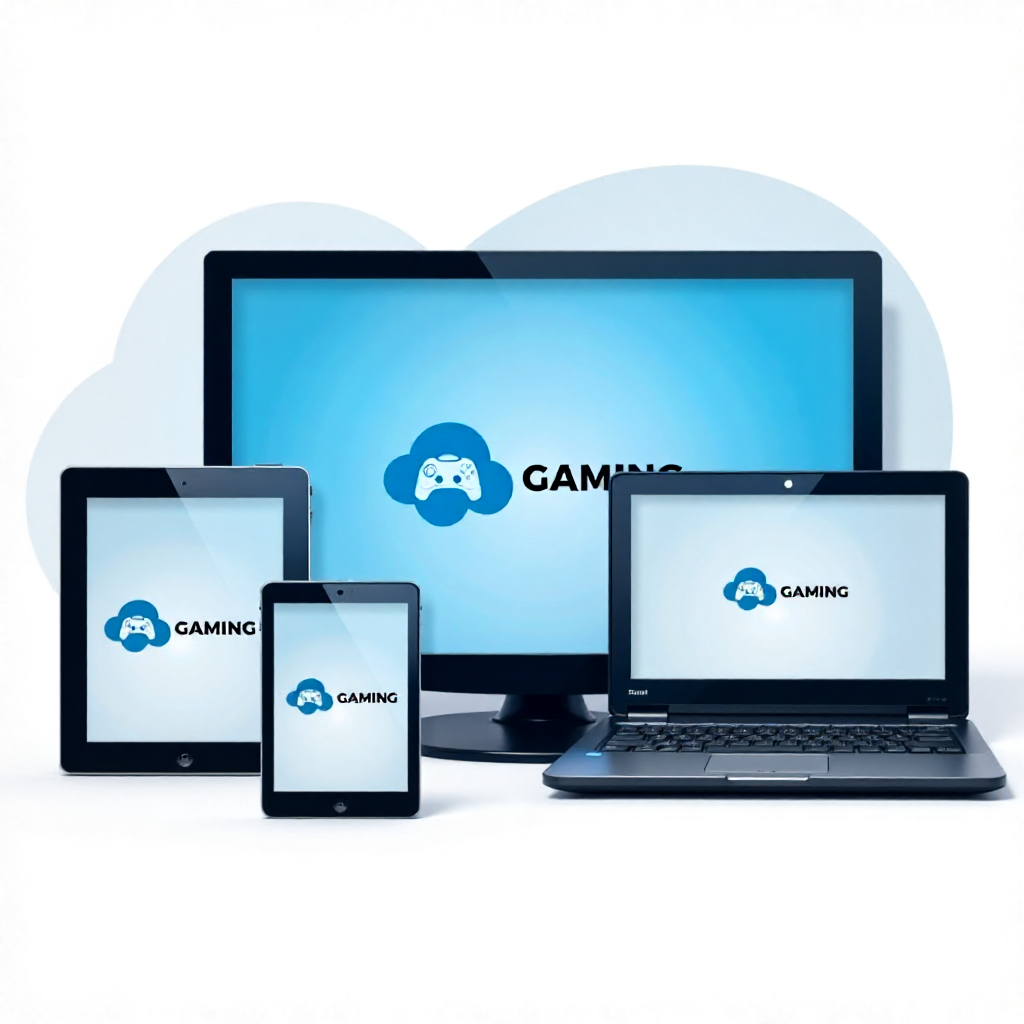
The hardware on your end becomes almost irrelevant. A five-year-old laptop with integrated graphics can run a game that would otherwise demand a high-end GPU, because the server is doing the rendering. That's the fundamental promise of hardware-free gaming.
Why Cloud Gaming Is Changing the Industry
Cloud gaming removes the biggest barrier to entry in modern gaming: the cost of hardware. Consoles and gaming PCs regularly cost hundreds to over a thousand dollars, and they need upgrading every few years to keep pace with new titles. A subscription model changes that equation entirely.
The practical benefits stack up quickly:
- Cross-device play — switch from your TV to your phone to your PC without losing progress
- No upgrade cycles — when a new GPU generation launches, the cloud provider upgrades their servers; you benefit automatically
- Instant access — no 50GB downloads or day-one patches; games are ready when you are
- Wider accessibility — people in regions where consoles are prohibitively expensive can access the same game library
The subscription model also changes how publishers think about distribution. Reaching players who own nothing more than a smartphone opens up a market that was previously invisible. That commercial logic is pushing major publishers to embrace game streaming platforms rather than resist them.
The Challenges Cloud Gaming Still Needs to Overcome
Cloud gaming has real limitations, and glossing over them would be doing readers a disservice. The most significant is input lag. Even with fast servers and a strong connection, there's a measurable delay between your input and the on-screen response. For fast-paced competitive games — fighting games, first-person shooters — that lag can be the difference between winning and losing.
Internet dependency is the other structural weakness. Cloud gaming requires a stable, reasonably fast broadband connection at all times. Lose your connection mid-session and the game stops. Play on a congested network and the stream degrades visibly. This makes cloud gaming unreliable in areas with poor infrastructure, and it means offline play simply isn't possible.
Game library gaps are a third friction point. Not every title is available on every platform, and licensing arrangements mean popular games sometimes disappear from catalogs with little warning. Unlike buying a disc or a digital copy, you don't own the games — you access them as long as the service exists and you maintain your subscription.
None of these are fatal problems. Latency is improving as edge computing infrastructure expands. Broadband coverage is widening globally. But they're real trade-offs worth understanding before you commit to a platform.
The Leading Cloud Gaming Services Right Now
Several platforms have emerged as the serious contenders in cloud gaming, each with a distinct approach to the market.
Xbox Cloud Gaming (xCloud)
Xbox Cloud Gaming is included with an Xbox Game Pass Ultimate subscription, which makes it one of the most accessible entry points. The catalog is extensive, covering first-party Microsoft titles alongside a rotating selection of third-party games. It runs on browsers, Android, iOS (via browser), and select Samsung smart TVs. For players already in the Microsoft ecosystem, xCloud is a natural extension of what they're already paying for.
NVIDIA GeForce NOW
GeForce NOW takes a different approach: rather than offering its own game catalog, it lets you stream games you already own on Steam, Epic Games Store, and other PC platforms. If you have a library built up over years, GeForce NOW unlocks it on any device without re-purchasing. The free tier exists but limits session length; paid tiers offer priority access and higher resolution streaming, including RTX-quality graphics. It's the strongest option for PC gamers who want device flexibility without abandoning their existing library.
PlayStation Plus Premium
Sony's PlayStation Plus Premium tier includes cloud streaming for a selection of PS4 and PS5 titles, alongside classic PlayStation games. It's tightly integrated into the PlayStation ecosystem, which means it works best for players who are already PlayStation-first. The catalog skews toward Sony's first-party exclusives and curated third-party titles rather than comprehensive coverage.
Other Notable Options
Amazon Luna and Google's earlier Stadia experiment (now discontinued) demonstrated both the appetite for cloud gaming and the difficulty of sustaining it. Luna continues as a subscription add-on within Amazon's ecosystem, with channel-based subscriptions for specific publishers. The Stadia shutdown was a reminder that even well-resourced platforms can struggle if the value proposition isn't clear enough.
How to Choose the Right Cloud Gaming Service for You
The right service depends on what you already own, what you want to play, and which devices you use most. There's no universal best option.
Start with your existing ecosystem. If you're a console player with a PlayStation library, PlayStation Plus Premium makes sense. If you're deep in Xbox Game Pass, xCloud is already included. If your gaming history is on PC with a Steam library, GeForce NOW is the most logical choice because it monetizes games you already paid for.
Think about your primary device. Xbox Cloud Gaming and PlayStation Plus Premium are optimized for their respective console audiences but work on other platforms too. GeForce NOW has strong PC and Mac support. If mobile gaming is your main use case, xCloud's browser-based iOS support gives it an edge.
Budget matters too. GeForce NOW's free tier is genuinely usable for casual play, though session limits are frustrating. Xbox Game Pass Ultimate bundles cloud gaming with a large game catalog for a monthly fee. PlayStation Plus Premium sits at the higher end of Sony's subscription tiers.
What You Need to Get Started with Cloud Gaming
Getting started with cloud gaming requires three things: a compatible device, a controller (for most games), and a reliable internet connection.
On the internet side, most services recommend a minimum of 15–25 Mbps for a stable 1080p stream. Higher resolutions or 60fps streaming typically need 35 Mbps or more. A wired ethernet connection is preferable to Wi-Fi, especially for latency-sensitive games, though modern Wi-Fi 6 routers perform well enough for casual play.
For devices, you have broad options: Windows PC, Mac, Android phone or tablet, iPhone or iPad (via browser for most services), smart TVs from Samsung and LG, and of course the consoles themselves. A Bluetooth or USB controller is strongly recommended — most services support Xbox controllers natively, and many support PlayStation controllers as well.
Setup time is minimal. Most platforms require only an account, a browser or app, and a payment method. You can be playing within minutes of signing up, which is itself one of cloud gaming's strongest selling points.
Is Cloud Gaming Truly the Future? The Verdict
Cloud gaming isn't replacing traditional gaming tomorrow. But the trajectory is clear. As broadband infrastructure improves globally, as edge computing reduces latency further, and as major publishers continue treating cloud platforms as primary distribution channels, the case for game streaming grows stronger every year.
The technology already works well enough for most casual and mid-core players. Competitive gamers and those in areas with poor internet will find it limiting for now — and that's an honest assessment worth holding onto. But for the majority of people who want to play great games without spending a fortune on hardware, cloud gaming is already a viable, practical choice.
The services leading the space — Xbox Cloud Gaming, NVIDIA GeForce NOW, and PlayStation Plus Premium — each serve a distinct audience well. Choosing between them is less about which is objectively best and more about which fits your existing habits and devices. Pick the one that meets you where you are, and the barrier to entry is lower than it's ever been.
Frequently Asked Questions
How fast does my internet need to be for cloud gaming?
Most cloud gaming services recommend at least 15 Mbps for 1080p streaming at standard frame rates. For higher-quality streams at 60fps or above, aim for 35 Mbps or more. A stable connection matters as much as raw speed — frequent drops will interrupt your session regardless of average bandwidth.
Can I play cloud games on a smartphone or smart TV?
Yes. Xbox Cloud Gaming, GeForce NOW, and PlayStation Plus Premium all support mobile devices and select smart TVs. On iOS, most services run through a browser rather than a dedicated app due to App Store restrictions, but the experience is functionally similar.
Do I own the games I play on cloud gaming services?
It depends on the service. With GeForce NOW, you stream games you already own on PC storefronts — so yes, those are yours. With subscription-based catalogs like Xbox Cloud Gaming or PlayStation Plus Premium, you're accessing a library tied to your subscription. If you cancel or the service ends, access ends too.
Is cloud gaming cheaper than buying a console?
For many players, yes — especially if you already own a device capable of running a browser or app. You avoid the upfront hardware cost entirely. Over several years, subscription fees add up, but the flexibility and lack of upgrade costs often offset that for players who don't need the absolute latest hardware.
Which cloud gaming service has the biggest game library?
Xbox Cloud Gaming currently offers one of the largest catalogs through Game Pass Ultimate, with hundreds of titles including day-one releases from Microsoft studios. GeForce NOW's accessible library depends on your personal PC game ownership, which can be larger or smaller depending on your history. PlayStation Plus Premium focuses on a curated selection rather than sheer volume.