Ranking the Best Free-to-Play MMORPGs in 2026
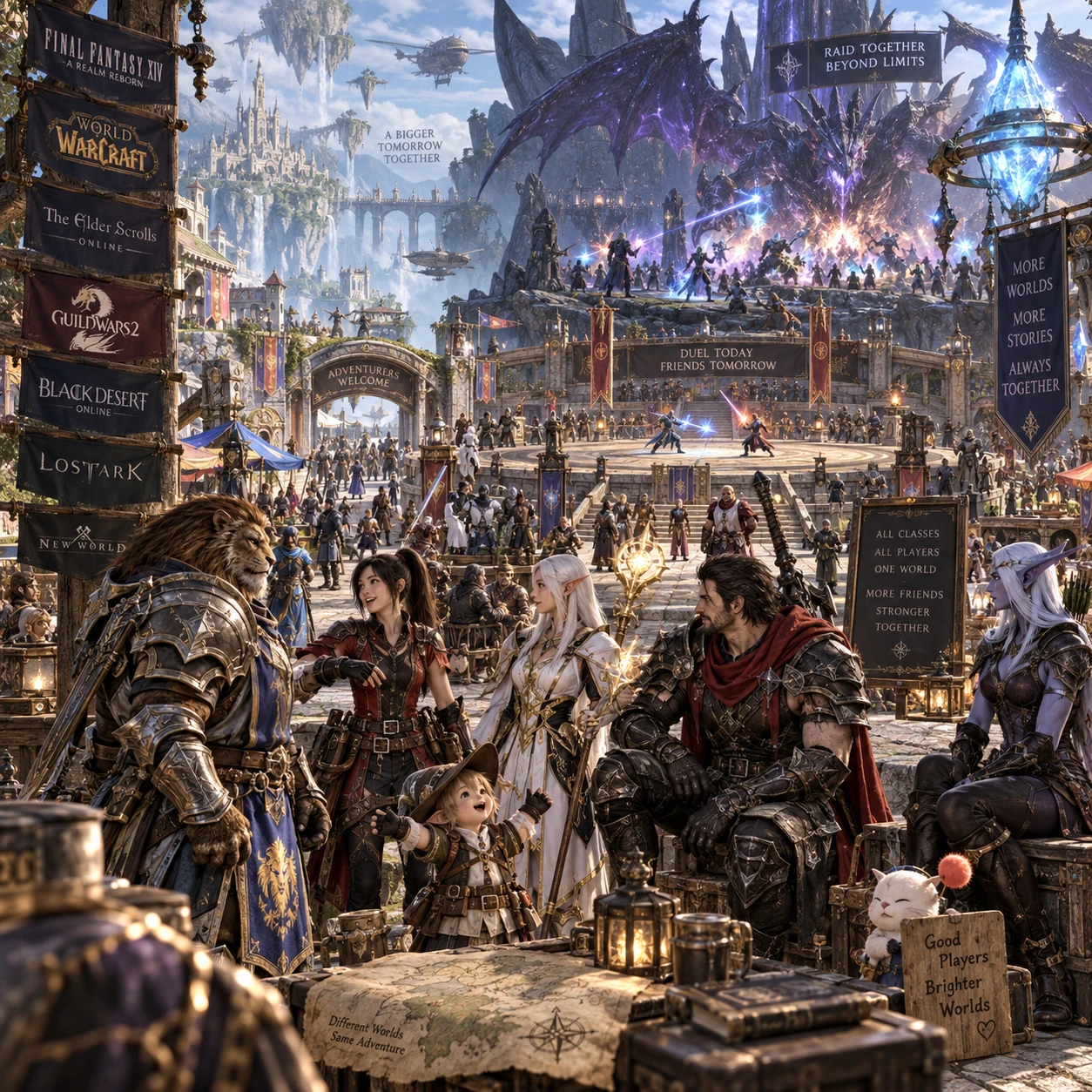
The best free-to-play MMORPGs give you room to explore, build a character, and meet other players without requiring an upfront purchase. In 2026, the strongest options still differ sharply: some reward exploration and casual play, while others center on raids, competitive PvP, or long-term progression.
This ranking focuses on games with substantial free access and established multiplayer systems. Free access can come with limits, and each game’s current terms may change, so check its official store page before committing time or money.
How We Ranked These Free-to-Play MMORPGs
We ranked these free-to-play MMORPGs by how well they balance gameplay, progression, accessibility, and multiplayer appeal. A high spot reflects a strong overall experience, not a guarantee that every player will prefer that game.
We considered four practical questions: Does combat stay engaging? Can a new player understand character progression and builds? Is there meaningful content to do alone and with a group? And can someone try the game without spending before knowing whether it suits them?
- Gameplay: Combat should feel responsive and give classes or builds a clear identity.
- Progression: Leveling, gear, skills, and endgame goals should offer a satisfying path forward without making the free experience feel like a prolonged advertisement.
- Accessibility: We favored games that are easy to sample, while noting account restrictions or content gates where relevant.
- Multiplayer: Guilds, raids, group dungeons, PvP, and a welcoming player community all count. Tournament potential is a bonus, not a requirement.
These are recommendations for different tastes, not a live player-count or tournament ranking. Community activity varies by region, server, and time of day, so check the current in-game listings and official community channels if a busy group scene is essential.
Best Free-to-Play MMORPGs in 2026
The best free-to-play MMORPG overall depends on your preferred activity, but Guild Wars 2 is the strongest all-round pick here for flexible exploration and multiplayer variety. The games below are ranked by how well they combine that broad appeal with distinctive strengths.
- Guild Wars 2: A standout for exploration, flexible character builds, and large-scale events. Its world encourages players to join nearby public activities without committing to a fixed group. The free account offers a substantial way to try the game, though some features and expansions require purchase.
- Final Fantasy XIV: A strong choice for story-driven progression, polished dungeons, and coordinated raids. Its free trial is generous in playable content, but it has account and feature restrictions, and the game’s model is not simply unlimited free access. Check the current trial terms before starting.
- Old School RuneScape: Best for players who enjoy a slower, skill-based journey and a world shaped by player choice. Its free-to-play area offers a real game rather than a short demo, while membership unlocks a much larger range of quests, skills, and locations.
- Lost Ark: A compelling pick for action-focused combat, collectible character progression, and demanding group encounters. Its isometric battles feel closer to an action RPG than a traditional tab-target MMORPG. Expect a strong emphasis on gear progression and systems that may take time to learn.
- Star Wars: The Old Republic: A good fit for players who want cinematic quests and class stories in a familiar science-fiction setting. Free access lets you explore a meaningful portion of the experience, while some conveniences and content depend on the game’s current account model.
- Albion Online: The most natural choice here for players who want a player-driven economy and open-world PvP. Equipment helps define your role, so changing builds can be more flexible than committing to a single class. Its full-loot risk and competitive zones make it less relaxing than the games above.
The order is a starting point, not a universal verdict. For example, a player who wants competitive open-world encounters may reasonably put Albion Online first, while someone drawn to questing and story may prefer Final Fantasy XIV or SWTOR.
What Each Game Does Best
Each ranked MMORPG has a different standout: Guild Wars 2 excels at open-world events, Final Fantasy XIV at structured group PvE, and Albion Online at player-driven PvP and trade. Choosing by signature strength is often more useful than comparing every game on one overall score.
Combat and character builds
For fast, ability-driven action, Lost Ark offers the most immediately kinetic combat in this list. Guild Wars 2 gives players room to experiment with weapon skills and builds, while Albion Online links equipment choices closely to a character’s combat role. If you prefer traditional hotbars and party roles, Final Fantasy XIV is a more familiar fit.
World exploration and progression
Guild Wars 2 makes exploration feel productive through public events and map objectives that bring players together organically. Old School RuneScape takes a different approach: progress often comes from setting your own goal, whether that means training a skill, finishing a quest, or earning equipment. Neither requires you to rush toward an endgame checklist.
Guilds, raids, and PvP
Final Fantasy XIV is a strong choice for scheduled dungeons and raids, while Lost Ark emphasizes demanding group encounters and character preparation. Guild Wars 2 supports large-scale world activities and competitive modes; Albion Online makes territory, risk, and player conflict central to its identity. For tournaments, check each game’s current official events and community-run competitions. Organized competitive activity can change over time, and none of these picks guarantees a particular tournament scene in every region.
Free-to-Play Models and Optional Purchases
Free-to-play MMORPGs let players start without a standard upfront purchase, but the free portion can include account limits, optional subscriptions, paid expansions, or convenience items. Before investing time in a character, find out which content is free and what changes when you pay.
There are three common models across these picks. A game may offer a broad free account with some features locked, as Guild Wars 2 and Albion Online do; a limited but substantial trial, as Final Fantasy XIV does; or a free base experience with a larger world behind membership, as in Old School RuneScape. Exact terms can change, so treat this as a guide to the model rather than a promise about current entitlements.
Look closely at what purchases affect. Expansions may add regions, stories, classes, or endgame activities. Subscriptions can unlock content or account features. Cosmetic items change appearance, while convenience purchases may save time or reduce friction. These categories do not have the same impact on competitive fairness.
A useful test is to play through the early game and ask: Am I enjoying the core combat and progression, or am I paying to get past a limit that bothers me? If the game only becomes enjoyable after a purchase, it may not be the right free-to-play choice for your budget. Spending is optional only if the free experience is enough for your goals.
Choosing the Right MMORPG for Your Play Style
Choose a free-to-play MMORPG by matching its regular activities to your available time, preferred combat, and appetite for group commitment. A game that suits your routine is more likely to hold your attention than one that simply tops a general ranking.
- For casual exploration: Start with Guild Wars 2. Public events let you contribute without arranging a full party, and exploration can feel rewarding even in shorter sessions.
- For story and structured PvE: Try the Final Fantasy XIV free trial if you want quest-led progression, dungeons, and raids. Check its current restrictions first, particularly if social or trading features matter to you.
- For self-directed, low-pressure progress: Old School RuneScape suits players who like setting personal goals and returning at their own pace.
- For action combat and endgame challenges: Consider Lost Ark if you enjoy learning encounters and building characters around gear progression.
- For competitive risk and a player-run economy: Choose Albion Online if open-world PvP and losing carried gear are part of the appeal, not a deal-breaker.
- For cinematic solo quests: SWTOR offers class-centered storytelling, with multiplayer activities available when you want to group up.
Before joining a guild or committing to a raid schedule, sample the game’s routine for a few sessions. Check queue times in your region, ask how often the group expects members to play, and see whether your preferred role or class has room. A lively community helps most when its expectations fit your own.
Final Ranking and Recommendations
Guild Wars 2 takes the top overall spot in this ranking because it combines accessible exploration, flexible builds, and low-friction group events. For a more specialized pick, choose the game whose combat and social demands match how you actually want to play.
Go with Final Fantasy XIV for story-led PvE and organized raids, Old School RuneScape for long-term self-directed progress, or Lost Ark for action combat and encounter-focused character building. Choose Albion Online for high-stakes PvP and a player-driven world, and SWTOR for cinematic class stories.
Free-to-play is a low-cost way to test an MMORPG, not a promise that every feature will remain free. Start with the game that makes you curious, learn its purchase limits before spending, and let the community and progression systems prove their value over time.